



In today’s construction and infrastructure industries, lifting efficiency and safety are vital. Among all lifting machines, the hydraulic truck crane stands out for its superior power, flexibility, and performance. Whether used for bridge construction, equipment installation, or emergency rescue, this type of crane combines mobility and strength in one efficient package.
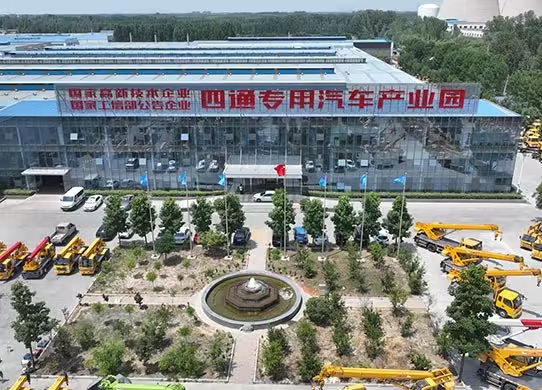
Jining Sitong Construction Machinery Co., Ltd., founded in 2005, is one of China’s leading manufacturers of truck cranes, aerial work platforms, sanitation trucks, and emergency rescue vehicles. With over 680 employees, 55 patents, and a provincial-level technology center, Sitong specializes in high-performance hydraulic truck cranes that serve customers in more than 20 countries. This article explores what a hydraulic truck crane is, how it works, its key advantages, and how to choose the right one for your project.
Table of Contents
What Is a Hydraulic Truck Crane?
A hydraulic truck crane is a mobile lifting vehicle powered by a hydraulic system that uses pressurized oil to generate lifting force. Unlike mechanical cranes that rely on gears and cables, hydraulic cranes use oil-filled cylinders and pumps to lift, extend, or rotate the boom. The system provides smooth, powerful, and precise movement, making it ideal for complex engineering operations.
Hydraulic truck cranes are mounted on heavy-duty trucks, allowing them to travel easily between job sites. They combine the mobility of a truck and the strength of a crane, providing unmatched convenience for construction and infrastructure projects.
How Hydraulic Systems Work in Truck Cranes
The hydraulic system is the heart of every hydraulic truck crane. It operates based on Pascal’s Law: pressure applied to a confined fluid is transmitted equally in all directions. This principle allows small amounts of hydraulic pressure to lift heavy loads efficiently.
Here’s how it works:
- The hydraulic pump converts mechanical energy from the truck engine into hydraulic energy.
- The control valves direct the flow of oil to various cylinders.
- Boom cylinders extend or retract the crane arm.
- The slewing system allows the crane to rotate smoothly.
- Hydraulic outriggers provide stability during lifting operations.
This system allows the operator to control heavy loads with precision and minimal effort.
Key Components of a Hydraulic Truck Crane
| Component | Function | Description |
|---|---|---|
| Hydraulic Pump | Generates pressure | Converts mechanical energy into hydraulic power |
| Hydraulic Cylinder | Lifts and extends boom | Provides vertical and horizontal motion |
| Control Valve | Regulates oil flow | Controls direction and speed of lifting |
| Boom | Main lifting arm | Telescopic sections extend to reach high areas |
| Slewing Mechanism | Enables rotation | Allows 360° rotation of the upper structure |
| Outriggers | Provide stability | Prevent crane tipping during operation |
Each component plays an essential role in ensuring that the hydraulic truck crane delivers power, safety, and precision during lifting operations.
Advantages of Hydraulic Truck Cranes
1. High Lifting Power
Hydraulic systems multiply small forces into massive lifting capacities. Even compact models can handle several tons, making them ideal for diverse engineering applications.
2. Smooth and Precise Operation
Hydraulic pressure allows gradual and controlled lifting and lowering. Operators can make micro-adjustments, improving accuracy and safety on-site.
3. Compact and Mobile Design
Unlike crawler or tower cranes, a hydraulic truck crane can move between job sites easily without disassembly. This mobility increases efficiency and reduces setup time.
4. Low Maintenance
With fewer mechanical parts than traditional cranes, hydraulic cranes have lower wear rates and simpler maintenance requirements. Regular oil changes and inspections ensure long-lasting performance.
5. Energy Efficiency
Modern hydraulic systems optimize pressure and flow, reducing fuel consumption while maintaining strong performance. This contributes to environmental sustainability and cost savings.
6. Safety and Stability
Equipped with hydraulic outriggers, overload protection, and electronic monitoring systems, Sitong hydraulic truck cranes guarantee stability and safe lifting under challenging conditions.

Hydraulic vs. Mechanical Truck Cranes
| Feature | Hydraulic Truck Crane | Mechanical Truck Crane |
|---|---|---|
| Lifting Method | Hydraulic pressure | Gear and cable systems |
| Operation | Smooth and precise | Requires manual control |
| Maintenance | Low | Frequent mechanical upkeep |
| Mobility | High – can travel on roads | Limited mobility |
| Setup Time | Minimal | Requires more assembly |
| Energy Efficiency | High | Moderate |
| Safety Features | Advanced hydraulic control | Basic mechanical locks |
As shown above, hydraulic cranes outperform mechanical models in nearly every aspect, offering smoother control, higher reliability, and greater adaptability.
Applications of Hydraulic Truck Cranes
Hydraulic truck cranes are widely used in:
- Infrastructure construction: bridge assembly, road maintenance, and building installation.
- Power projects: handling transformers and poles.
- Water management: transporting heavy components for dams and pipelines.
- Municipal engineering: lifting streetlights and installing utilities.
- Emergency rescue: clearing obstacles and lifting vehicles in disaster zones.
Their versatility makes them indispensable across industries.
How to Choose the Right Hydraulic Truck Crane
Selecting the right hydraulic truck crane involves evaluating project needs and site conditions. Here are key factors to consider:
- Lifting Capacity: Choose a crane that exceeds your maximum load by at least 20% for safety.
- Working Radius: Ensure the crane’s load chart matches your required reach.
- Boom Length: Longer booms are ideal for tall structures; shorter ones are better for confined spaces.
- Site Conditions: Consider terrain stability and available setup space.
- Transport Needs: If the crane needs to move between multiple sites, a truck-mounted design is ideal.
Sitong’s wide range of hydraulic truck cranes, from 8 tons to 200 tons, ensures there’s a perfect model for every engineering demand.
Sitong Hydraulic Truck Cranes: Quality You Can Trust
As a leading construction machinery manufacturer, Jining Sitong Construction Machinery Co., Ltd. integrates advanced technology, precision production, and strict quality control to deliver reliable lifting solutions.
- Provincial technology center: drives R&D and innovation.
- 55 patents: covering hydraulic systems, boom designs, and control technology.
- ISO & CE certifications: ensuring global compliance and safety.
- Global presence: products exported to 20+ countries across Asia, Africa, and the Middle East.
Every Sitong hydraulic truck crane undergoes rigorous testing to ensure stability, performance, and durability.
Maintenance Tips for Hydraulic Truck Cranes
To keep your hydraulic truck crane in optimal condition:
- Check hydraulic oil levels and replace regularly.
- Inspect hoses and seals for leaks.
- Clean filters and replace them on schedule.
- Test control valves for responsiveness.
- Lubricate moving parts to prevent friction.
Following these steps ensures long service life and consistent performance.

Future Trends of Hydraulic Truck Cranes
As technology advances, hydraulic truck cranes are evolving toward automation, smart monitoring, and energy efficiency. Future trends include:
- Intelligent load monitoring systems to prevent overload.
- Hybrid or electric hydraulic systems for eco-friendly performance.
- Telematics integration for remote operation and diagnostics.
- Lightweight materials for improved mobility.
Sitong continues to lead innovation in this field, developing next-generation hydraulic truck cranes that combine power, intelligence, and sustainability.
Conclusion
The hydraulic truck crane represents the perfect balance between power, precision, and mobility. From construction sites to rescue operations, it delivers unmatched performance and safety. With strong R&D capabilities, advanced manufacturing, and global recognition, Sitong Construction Machinery provides reliable hydraulic truck cranes that meet the demands of modern engineering projects.
Discover more about Sitong’s advanced lifting solutions at www.stcmcrane.com and find the ideal crane for your next project.
FAQ
What is a hydraulic truck crane?
It’s a mobile lifting vehicle that uses hydraulic systems to lift, extend, and rotate heavy loads efficiently.
How does a hydraulic system work in a truck crane?
It uses pressurized oil to transmit force through cylinders, allowing smooth lifting and precise control.
What are the advantages of a hydraulic truck crane?
High lifting power, mobility, energy efficiency, low maintenance, and enhanced safety.
How often should hydraulic oil be changed?
Typically, every 1,000–1,500 working hours, depending on operating conditions.
Are Sitong hydraulic truck cranes certified internationally?
Yes. All models meet ISO and CE certification standards.