



Choosing a truck crane supplier requires more than comparing maximum capacity. The supplier should translate the buyer’s load, working radius, lift height, road conditions, ground conditions, and duty cycle into a configuration that can be checked against a load chart and technical drawing.
This practical guide shows how to compare a truck crane supplier for construction, infrastructure, logistics, utility, and industrial lifting. It focuses on information that procurement teams can verify before requesting a final quotation from a truck crane supplier.
Define the Operating Requirement
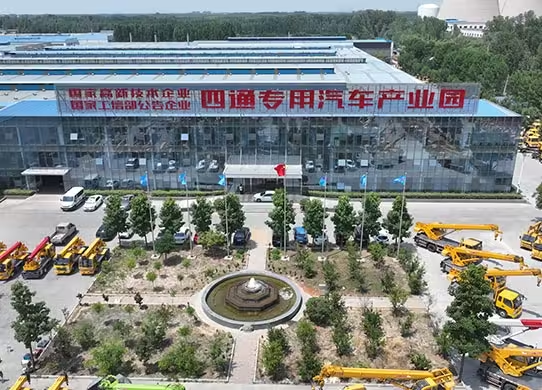
Construction companies, infrastructure contractors, industrial operators, and equipment distributors all face the same basic challenge when selecting lifting machinery: the equipment must fit the work rather than forcing the work to fit the machine. Jining Sitong Construction Machinery Co., Ltd. has built its business around developing practical equipment for a wide range of operating environments. Established in 2005, the company manufactures truck cranes, aerial work platforms, sanitation vehicles, and other construction machinery for customers in China and international markets. Buyers can explore its product range at https://www.stcmcrane.com/ As a China truck crane manufacturer, the company combines engineering, manufacturing, sales, and service to support customers with different lifting and transportation requirements.
Modern projects rarely rely on a single type of lifting equipment. A contractor may need a mobile crane on one site, a compact crane in a restricted area, and vehicle-mounted lifting equipment for another assignment. This is why choosing a versatile construction machinery manufacturer can make equipment sourcing more efficient. Jining Sitong Construction Machinery Co., Ltd. produces several categories of machinery, giving customers access to solutions for construction, municipal work, industrial maintenance, logistics, material handling, utility projects, and other demanding applications.
A reliable truck crane supplier should ask what the crane will lift, where the truck can park, how far the load must travel horizontally, and how often the machine will move between sites. These details determine whether the buyer needs more reach, more capacity at radius, a different chassis, or a more compact setup.
Compare Load Charts Instead of Model Names
One of the most important advantages of truck cranes is their combination of lifting ability and road mobility. A truck crane manufacturer must design equipment that can move between locations while still providing the stability and control necessary for lifting operations. This type of flexibility can reduce the need for separate transportation arrangements and can make it easier for contractors to deploy lifting equipment where it is needed most.
Hydraulics play a central role in the performance of many modern cranes. A hydraulic truck crane uses controlled hydraulic power to manage boom movements and lifting functions. Operators can use these systems to position loads with greater control while performing a variety of tasks. Depending on the configuration, hydraulic cranes may be used to place structural materials, lift machinery, support utility installation, move construction components, or assist with maintenance projects.
Ask the truck crane supplier for the complete load chart, not only the maximum rating. Review capacity at the pickup radius, placement radius, boom length, and outrigger setup used on the job. Include rigging, hook block, and lifting attachments in the required load.

Check Mobility and Chassis Fit
The value of mobility becomes especially clear when work is spread across several locations. A mobile crane supplier can provide equipment designed for companies that need to move from one job site to another without relying exclusively on fixed lifting systems. This is useful for businesses working on road projects, industrial installations, utility networks, equipment relocation, temporary construction sites, and service operations where lifting requirements can change frequently.
Truck mounted cranes provide another flexible option. A truck mounted crane manufacturer develops equipment that combines a crane with a vehicle platform, creating a machine that can transport itself and perform lifting operations after arriving at the job site. For businesses that routinely carry materials or equipment, truck mounted lifting equipment can improve operational efficiency by allowing a single vehicle to support both transportation and lifting duties.
The carrier affects axle loading, turning radius, braking, road speed, dimensions, service access, and local compliance. A truck crane supplier should explain which chassis options match the destination market and whether the completed truck can reach the site without creating avoidable transport problems.
Buyers comparing mid-range equipment can review the 10 ton truck mounted crane as a reference point, then verify whether its chart and dimensions match the actual application.
Evaluate Controls, Stability, and Maintenance
Selecting the right truck crane supplier involves more than simply comparing maximum lifting capacity. Buyers should consider how the crane will actually be used from day to day. Boom reach, lifting height, working radius, vehicle dimensions, hydraulic configuration, stability, operating controls, maintenance access, and transportation requirements can all affect whether a machine is suitable for a particular job. Equipment that is properly matched to the application can provide better productivity and more practical long-term value.
Some projects require a very different type of lifting solution. Large cranes can be difficult to use in narrow spaces, indoor locations, or sites where access is restricted. A spider crane manufacturer focuses on compact equipment that can operate in environments where conventional lifting machinery may not be practical. These machines can be useful for glass installation, interior construction, building renovation, maintenance, landscaping, and specialized lifting work where maneuverability is especially important. International buyers also pay close attention to manufacturing qualifications and quality controls. Businesses looking for a crane manufacturer China can rely on may evaluate a company's manufacturing experience, technical capabilities, certifications, service structure, and product range before making a purchasing decision. Jining Sitong Construction Machinery Co., Ltd. is a national high-tech enterprise and has obtained multiple international quality certifications. These credentials support its work with both domestic and overseas customers.
Ask the truck crane supplier how the boom, hoist, slewing system, hydraulic valves, outriggers, overload protection, and emergency functions are configured. Controls should support predictable placement, while maintenance points should remain accessible for routine inspection.

Assess Documentation and After-Sales Support
The company's manufacturing experience also extends beyond cranes. Its product portfolio includes aerial work platforms and sanitation vehicles in addition to lifting equipment. This broader product base reflects the company's position as a diversified construction machinery manufacturer rather than a producer focused on only one narrow equipment category. Customers working across several industries may benefit from having access to machinery that serves different operational needs. After-sales service can be just as important as the initial purchase. Machinery may require technical support, maintenance guidance, parts coordination, or operational assistance over the course of its working life. A professional lifting equipment supplier should therefore provide more than equipment alone. Jining Sitong Construction Machinery Co., Ltd. integrates service with its manufacturing and sales operations, helping customers receive support throughout the ownership process.
For contractors, dealers, fleet operators, industrial companies, and other equipment buyers, choosing machinery that matches actual working conditions can improve efficiency and flexibility across multiple projects. Jining Sitong Construction Machinery Co., Ltd. continues to serve customers seeking a China truck crane manufacturer, truck crane supplier, truck mounted crane manufacturer, truck crane manufacturer, crane manufacturer China, spider crane manufacturer, mobile crane supplier, hydraulic truck crane, truck mounted lifting equipment, construction machinery manufacturer, or lifting equipment supplier. For additional information, contact [email protected], call 0537-2773888 or +86 189 0547 1207, or visit Changgou Sitong Industrial Park, Rencheng District, Jining City, Shandong Province.
Before ordering, the truck crane supplier should provide a specification, load chart, dimensional drawing, included equipment list, maintenance guidance, warranty terms, and a clear process for spare parts and technical questions. Confirm which documents and accessories are included in the quotation.
The official OSHA cranes and derricks resource provides general safety and regulatory information. Buyers and operators must also follow local regulations, the equipment manual, jobsite controls, and a qualified lift plan.
Supplier Comparison Table
| Comparison point | Evidence to request | Procurement purpose |
|---|---|---|
| Capacity at radius | Truck crane supplier load chart for the proposed setup | Confirms usable lifting performance |
| Vehicle configuration | Truck crane supplier dimensions and chassis specification | Checks road and site access |
| Stability | Truck crane supplier outrigger and setup requirements | Matches the crane to ground conditions |
| Control and service | Truck crane supplier hydraulic and maintenance information | Supports accurate work and routine inspection |
| Delivery support | Truck crane supplier manuals, warranty, and parts process | Clarifies support after handover |
Compare each truck crane supplier against the same operating brief and evidence list. This keeps the evaluation focused on application fit instead of marketing descriptions or a single headline specification.
Procurement Checklist
- Tell the truck crane supplier the normal and maximum load weights.
- Give the truck crane supplier the working radius, required height, and available setup area.
- Ask the truck crane supplier to confirm road, axle, registration, and destination requirements.
- Request the load chart, drawing, manuals, and equipment list from the truck crane supplier.
- Document the truck crane supplier warranty, spare-parts, commissioning, and training responsibilities.
A structured checklist helps the buyer ask each truck crane supplier the same questions and identify missing technical information before commercial terms are finalized.
Frequently Asked Questions
What should I tell a truck crane supplier first?
Tell the truck crane supplier the load, working radius, lift height, site access, ground conditions, travel distance, destination country, and expected number of lifts. These inputs shape the configuration.
Is maximum tonnage enough for comparison?
No. Maximum tonnage normally applies at a short radius. Compare the load chart at the radius and boom length required for the planned task.
How do I compare chassis options?
Compare axle layout, dimensions, turning radius, payload allowance, braking, road compliance, local service access, and how the crane subframe integrates with the carrier.
What support should be confirmed before purchase?
Confirm the truck crane supplier manuals, warranty coverage, parts ordering, remote technical support, commissioning, training responsibilities, and response process for technical questions.
When should I request a custom configuration?
Discuss customization when standard boom reach, carrier dimensions, control layout, attachments, or destination requirements do not match the normal work cycle. The final design still needs documented engineering review.
Request a Configuration Review
Send the operating brief through the STCM inquiry page. A truck crane supplier can then discuss suitable capacity, boom, chassis, and outrigger options using the actual lifting requirement.
You can also compare available configurations in the STCM crane product range before requesting the load chart and dimensional drawing for the preferred model.