

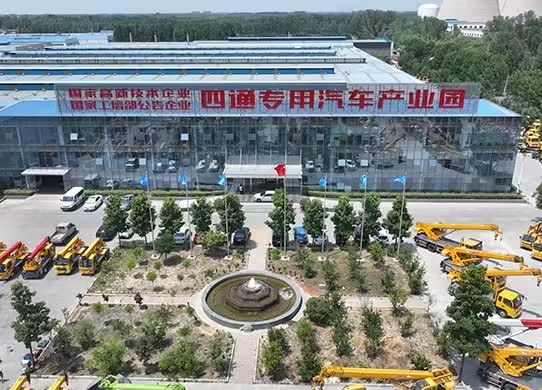


Truck cranes are essential for lifting heavy equipment, poles, and transformers in utility and power-line projects. Combining mobility, precision, and safety, they help contractors complete complex tasks quickly, even in confined urban or challenging rural sites. Sitong truck cranes deliver reliable performance, making every lift efficient and secure.
Table of Contents
Introduction
Infrastructure development, particularly in the utility and power sector, presents unique challenges. Heavy transformers, poles, and electrical equipment must be lifted accurately, often in confined or uneven spaces, and installed with precision to meet engineering and safety standards. Traditional cranes may struggle with mobility, setup time, or lifting capacity. Truck cranes, however, combine a mobile chassis with hydraulic lifting technology, making them ideal for projects requiring rapid deployment and versatile operation.
Their key benefits include mobility across multiple sites without specialized transport vehicles, adjustable boom lengths for varying heights and horizontal reach, advanced hydraulic systems that allow precise and controlled lifting, and stability systems to maintain safety on uneven or soft terrain. Sitong truck cranes integrate these advantages, enabling project teams to improve efficiency while maintaining high safety standards.
Typical Applications of Truck Cranes in Utility Projects
Truck cranes are widely applied in diverse utility and power-line projects, including transformer installation, pole and mast erection, equipment relocation, line maintenance and repair, and emergency infrastructure restoration. For example, transformers weighing up to 100 tons can be lifted and accurately placed on concrete pads or substations, while telecommunication and power poles can be positioned in constrained urban or congested rural sites. Equipment such as generators and switchgear can be moved without the need for additional transport vehicles, and damaged poles or components can be replaced quickly to restore service. Each application demands precise load handling, stability, and mobility, underscoring the necessity of well-chosen truck cranes for safety and efficiency.
Advantages of Truck Cranes for Utility Operations
Truck cranes provide unmatched advantages for utility projects. Their high mobility allows them to travel across sites without additional transport, saving time and reducing logistical complexity. Versatility in lifting enables handling of loads ranging from 8 to over 100 tons, accommodating diverse project requirements. Rapid deployment is possible due to hydraulic outriggers and telescopic booms, reducing setup time to as little as 10–20 minutes. Precision and control are enhanced by advanced sensors and smooth hydraulic movement, ensuring accurate placement of heavy equipment. Enhanced safety features, including outriggers, anti-sway systems, and automatic stabilization, reduce operational risk and protect both operators and equipment.
Selecting the Right Truck Crane for Power-Line Tasks
Choosing the optimal crane involves evaluating multiple factors, such as load requirements, boom reach, site terrain, frequency of lifts, operational conditions, and maintenance support. Load requirements should consider the maximum weight of transformers, poles, or other equipment, with a safety margin of at least 20%. Boom reach must accommodate both vertical and horizontal distances. Uneven or soft ground may require reinforced outriggers or all-terrain chassis. Projects requiring frequent lifts need durable hydraulic systems and efficient operation. Extreme weather or confined urban sites may necessitate additional safety features. Sitong offers cranes suited to these varying conditions, from compact urban models to heavy-duty cranes for high-capacity installations.
Key Features of Sitong Truck Cranes for Utility Applications
Sitong truck cranes are engineered to deliver maximum efficiency, safety, and reliability. Advanced hydraulic systems with dual-pump, load-sensing technology provide smooth and precise lifting under heavy loads. Telescopic booms offer variable reach to accommodate different installation heights and spans. All-terrain stability features, such as automatic leveling outriggers, allow safe operation on uneven surfaces. Ergonomic cabins with intuitive controls reduce operator fatigue while improving precision. Modular hydraulic lines and centralized lubrication points facilitate maintenance, while load monitoring and anti-sway technology protect personnel and materials during complex lifts. These features make Sitong cranes ideal for utility and power-line applications worldwide.
Safety Protocols During Utility and Power-Line Operations
Safety is critical due to heavy loads and high-voltage environments. Recommended protocols include ensuring operators are certified, performing site hazard evaluations, using load monitoring systems, fully deploying outriggers, assessing weather conditions, and maintaining clear communication with spotters or radio systems. Following these protocols minimizes accidents, protects equipment, and ensures projects stay on schedule.
Maintenance and Operational Tips
Regular maintenance maximizes crane lifespan and operational efficiency. Daily inspections should include hydraulic lines, control systems, tires, and outriggers. Weekly lubrication of moving joints and telescopic boom sections is essential. Monthly checks on structural integrity, cables, and safety systems help prevent breakdowns. Professional servicing every 3–6 months ensures hydraulic systems, filters, and safety components are fully functional. Keeping detailed logs of inspections and maintenance allows predictive planning and regulatory compliance. Sitong provides detailed manuals, training, and technical support to ensure cranes remain fully operational in demanding utility environments.

Case Study: Sitong Truck Cranes in National Grid Installation
A Southeast Asian utility company tasked Sitong with lifting 80-ton transformers and 35-meter power poles across multiple rural sites with varying terrain conditions. Sitong supplied two 100-ton hydraulic truck cranes with telescopic booms and all-terrain outriggers. Installation time was reduced by 40%, operational costs decreased by 25%, and zero accidents were reported. Operator satisfaction improved due to ease of control and rapid setup. This case demonstrates how Sitong cranes combine lifting power, mobility, and safety to meet demanding utility and power-line project requirements.
Table: Recommended Truck Cranes for Utility & Power-Line Projects
| Task | Typical Load | Boom Length | Recommended Crane Type | Setup Time |
|---|---|---|---|---|
| Transformer Installation | 50–100 tons | 25–45 m | Medium-to-heavy hydraulic crane | 15–20 min |
| Power Pole Erection | 8–50 tons | 15–35 m | Light-to-medium hydraulic crane | 10–15 min |
| Equipment Relocation | 10–80 tons | 20–40 m | All-terrain hydraulic crane | 15 min |
| Line Maintenance | 8–30 tons | 15–25 m | Compact hydraulic crane | 10 min |
FAQ
Which truck crane is best for transformer installation?
Medium-to-heavy hydraulic truck cranes with telescopic booms and reinforced outriggers provide maximum stability.
Can truck cranes operate in tight urban streets?
Yes. Sitong’s compact truck cranes are designed for limited-access areas without compromising lifting capacity.
How can operators safely lift tall poles near power lines?
Operators should use certified training, fully deploy outriggers, monitor load sensors, and follow environmental safety protocols.
How frequently should cranes be maintained in utility operations?
Daily operational checks, weekly lubrication, and professional servicing every 3–6 months are recommended.
Can Sitong customize cranes for unique utility projects?
Yes, Sitong engineers provide tailored solutions based on site conditions, load specifications, and project requirements.