

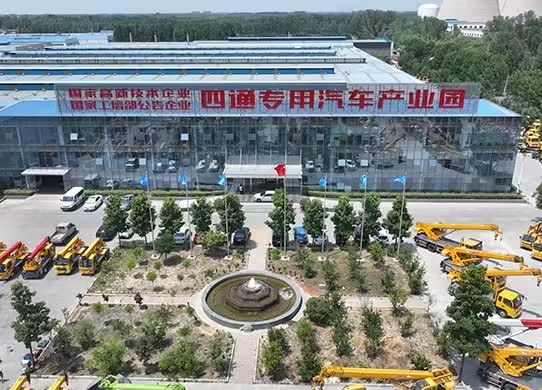


Buying a truck crane from China can reduce procurement costs, but choosing the wrong manufacturer may lead to poor lifting performance, unstable hydraulic systems, delayed spare parts, and higher long-term maintenance costs.
For contractors, equipment dealers, rental companies, and project buyers, the key is not only the price. You also need to check lifting capacity, working radius, boom length, load chart, chassis configuration, safety system, customization ability, and after-sales support.
This guide will help you evaluate a reliable truck crane manufacturer in China and choose the right lifting equipment for construction, infrastructure, logistics, utility maintenance, and industrial lifting projects.
Table of Contents
Why Many Global Buyers Choose Truck Crane Manufacturers in China
For many international buyers, sourcing truck cranes from China offers several practical advantages. The most obvious reason is cost efficiency, but that should not be the only factor. A capable Chinese truck crane manufacturer can provide flexible model options, customized chassis configurations, fast production capacity, and export experience for different markets.
A truck crane is widely used in construction, road maintenance, power engineering, equipment installation, municipal projects, logistics yards, and industrial lifting operations. Different projects require different boom lengths, lifting capacities, working radii, chassis types, hydraulic systems, and safety configurations.
This is where a professional manufacturer becomes important. Instead of offering only a standard model, a strong supplier should be able to recommend the right crane based on your actual job-site conditions.
For example, a buyer working on urban construction projects may need a compact 8 ton or 10 ton truck crane with flexible operation and easier road access. A utility contractor may care more about working radius, boom stability, and frequent-duty performance. A logistics company may prefer a truck-mounted crane that combines transportation and lifting in one vehicle.
A reliable truck crane manufacturer should understand these different needs and provide a solution, not just a product.
What Is a Truck Crane?
A truck crane is a lifting machine mounted on a truck chassis. It combines mobility and lifting capability, allowing the equipment to travel on roads and perform lifting tasks at different job sites. Compared with stationary cranes or some crawler lifting equipment, truck cranes are more flexible for projects that require frequent relocation.
A typical truck crane includes several major parts:
- Truck chassis
- Crane boom
- Hydraulic system
- Outriggers
- Slewing system
- Operator cabin or control system
- Counterweight or balance structure
- Safety control system
The biggest advantage of a truck crane is its mobility. It can move between job sites without complex transportation arrangements. This makes it especially useful for construction contractors, utility maintenance teams, municipal engineering companies, and equipment rental businesses.
However, the performance of a truck crane depends heavily on design quality, component selection, welding process, hydraulic system reliability, and manufacturer experience. That is why choosing the right truck crane manufacturer in China is so important.

Key Factors to Check When Choosing a Truck Crane Manufacturer in China
1. Confirm Whether the Supplier Is a Real Manufacturer
The first thing you should verify is whether the supplier is a real manufacturer or a trading company. This does not mean trading companies are always unreliable, but for truck cranes, direct cooperation with a factory often gives you better control over product configuration, production schedule, customization, and after-sales communication.
A real truck crane manufacturer usually has:
- Its own production workshop
- Crane assembly capability
- Welding and structural processing equipment
- Technical engineers
- Quality inspection process
- Product testing area
- Spare parts support
- Export documentation experience
When communicating with a supplier, ask for factory photos, production videos, testing videos, product certificates, and previous export cases. A serious manufacturer should be able to provide clear and consistent information.
You can also ask technical questions about boom material, hydraulic system configuration, chassis options, lifting capacity, outrigger span, safety devices, and maintenance requirements. If the supplier only replies with general marketing language and cannot answer technical questions clearly, you should be cautious.
2. Check the Manufacturer’s Product Range
A reliable truck crane manufacturer should not only sell one model. A wider product range usually means the supplier has stronger engineering capability and more experience with different applications.
For example, a professional lifting equipment manufacturer may provide:
- Small truck cranes
- 4 ton truck cranes
- 8 ton truck cranes
- 10 ton truck cranes
- 14 ton truck cranes
- Truck-mounted cranes
- Spider cranes
- Crawler spider cranes
- Marine cranes
- Customized lifting vehicles
A broad product range is valuable because your project may require different lifting solutions in the future. If one supplier can provide truck cranes, truck-mounted cranes, and compact spider cranes, it becomes easier to build long-term cooperation.
For buyers who operate in construction, logistics, utility, industrial maintenance, or equipment rental, having access to multiple lifting equipment types can also improve procurement efficiency.
3. Match Crane Capacity with Real Working Conditions
Many buyers focus only on the maximum lifting capacity, but this is one of the most common mistakes when buying a truck crane.
For example, a 10 ton truck crane does not mean it can lift 10 tons at every working radius. The actual lifting capacity changes depending on boom length, working radius, outrigger position, ground condition, and lifting height.
Before choosing a truck crane model, you should clarify:
- What is the maximum load you need to lift?
- What is the normal working radius?
- What is the required lifting height?
- How often will the crane be used?
- Is the job site narrow, uneven, or urban?
- Does the crane need to travel frequently?
- Are there local road restrictions?
- Do you need special chassis configuration?
A professional truck crane manufacturer should help you evaluate these factors. If a supplier only recommends the largest or most expensive model without understanding your project, that is not a good sign.
Basic Truck Crane Selection Reference
| Project Requirement | Recommended Focus | Why It Matters |
|---|---|---|
| Urban construction | Compact size, flexible chassis, easy operation | Suitable for narrow roads and frequent movement |
| Utility maintenance | Working radius, boom stability, safety system | Helps with pole, cable, and equipment lifting |
| Logistics yard | Lifting speed, operational efficiency, durability | Supports frequent loading and unloading |
| Infrastructure work | Higher capacity, longer boom, strong chassis | Handles heavier and more complex lifting tasks |
| Equipment installation | Precision control, stable outriggers, smooth hydraulic system | Reduces risk during delicate lifting |
| Rental business | Versatile capacity, easy maintenance, spare parts availability | Improves equipment utilization and service life |
This table shows why model selection should be based on real work needs rather than only rated capacity.
4. Evaluate Boom Design and Structural Quality
The boom is one of the most important parts of a truck crane. A high-quality boom should offer strength, stability, and smooth extension performance. Poor boom design can lead to unstable lifting, reduced service life, and higher safety risks.
When evaluating a truck crane manufacturer in China, ask about:
- Boom section design
- Steel material
- Welding process
- Surface treatment
- Extension and retraction smoothness
- Structural testing
- Load testing before delivery
Boom length is also important. A longer boom can provide better lifting height and reach, but it also requires stronger structural design and stable hydraulic control. A good manufacturer should balance lifting capacity, boom length, and safety performance.
You should also ask whether the manufacturer can provide a load chart. The load chart helps you understand how much weight the crane can lift at different working radii. It is one of the most important documents for safe operation.
5. Check the Hydraulic System
The hydraulic system directly affects lifting performance, operation smoothness, safety, and long-term reliability. For truck cranes, hydraulic quality is especially important because the equipment often works under changing loads and different job-site conditions.
A reliable truck crane manufacturer should use stable hydraulic components and design the system for smooth operation. Important points include:
- Hydraulic pump performance
- Valve control accuracy
- Cylinder quality
- Hose durability
- Oil leakage prevention
- System pressure stability
- Maintenance accessibility
Poor hydraulic systems may cause slow operation, unstable lifting, leakage, overheating, and frequent maintenance problems. For overseas buyers, these issues can become expensive because replacement parts and service support may take time.
Before purchasing, ask the manufacturer to explain the hydraulic system configuration and maintenance requirements. You can also request operation videos to check lifting smoothness and control response.
6. Compare Chassis Options Carefully
The truck chassis is another key factor. A truck crane is not just a crane body; it is a complete vehicle system. The chassis affects road performance, load-bearing capacity, fuel consumption, maintenance convenience, and local compliance.
When choosing a truck crane manufacturer in China, confirm whether they can provide suitable chassis options for your target market.
Important chassis factors include:
- Engine power
- Wheelbase
- Axle configuration
- Load capacity
- Driving performance
- Spare parts availability
- Emission standard
- Cab design
- Road registration requirements
Some buyers need left-hand drive, while others require right-hand drive. Some countries have stricter emission regulations or road weight limits. These details must be confirmed before production.
A reliable manufacturer should ask about your country, usage environment, road conditions, and import requirements before recommending a chassis.
7. Review Safety Features
Safety should never be treated as an optional feature. Truck cranes operate under heavy loads, and improper design or poor safety protection can lead to serious risks.
A quality truck crane should include safety features such as:
- Overload protection
- Hydraulic locking system
- Stable outriggers
- Emergency stop function
- Load moment control
- Warning devices
- Anti-slip access areas
- Clear operation labels
- Reliable control system
For international buyers, safety requirements may vary by market. Some projects require higher safety standards, especially in public infrastructure, energy, construction, and industrial sites.
Ask the manufacturer which safety systems are included in the standard configuration and which can be customized. A trustworthy manufacturer should be transparent about these details.
8. Ask About Customization Capability
Many B2B buyers need more than a standard truck crane. Different markets and projects often require customized specifications.
Common customization options may include:
- Lifting capacity
- Boom length
- Chassis brand or configuration
- Left-hand or right-hand drive
- Outrigger structure
- Control method
- Paint color
- Logo branding
- Cargo box design
- Hydraulic system configuration
- Safety device upgrades
- Export packaging
- Spare parts package
Customization is especially important for dealers, rental companies, and project contractors. If you need OEM or private-label cooperation, you should confirm whether the manufacturer can support logo customization, documentation, and long-term spare parts supply.
A real factory usually has stronger customization capability than a simple reseller because it controls production and technical adjustment directly.

9. Check Export Experience and Documentation Support
For overseas buyers, export experience is a very important part of supplier evaluation. A truck crane is a large piece of equipment, and international delivery requires correct documentation, packaging, shipping coordination, and customs support.
A reliable truck crane manufacturer should be familiar with:
- Export invoice
- Packing list
- Certificate of origin
- Bill of lading
- Product certificate
- Technical documents
- Operation manual
- Maintenance manual
- Spare parts list
- Shipping arrangement
- Container or bulk cargo loading plan
If the supplier has exported to multiple countries, they are more likely to understand overseas buyer requirements. Export experience also helps reduce communication problems during delivery.
Before placing an order, ask the manufacturer about previous export markets, shipping methods, and whether they can provide photos or videos before delivery.
10. Evaluate Quality Inspection Process
Quality inspection should happen before the crane leaves the factory. Once the equipment arrives overseas, solving quality problems becomes more difficult and more expensive.
A professional truck crane manufacturer should inspect:
- Welding quality
- Boom structure
- Hydraulic system
- Electrical system
- Outrigger performance
- Slewing function
- Lifting operation
- Safety devices
- Vehicle appearance
- Paint quality
- Load testing
- Documentation
You should request pre-delivery inspection photos and videos. For larger orders, you may also arrange third-party inspection.
A manufacturer that welcomes inspection usually has more confidence in its product quality. A supplier that avoids inspection or refuses to provide testing information should be treated carefully.
11. Compare After-Sales Service and Spare Parts Support
After-sales service is one of the most important differences between a low-quality supplier and a reliable manufacturer. Even a well-made truck crane requires regular maintenance and occasional parts replacement.
Before choosing a truck crane manufacturer in China, ask these questions:
- Do you provide operation manuals?
- Do you provide maintenance guidance?
- Can you supply spare parts?
- How fast can spare parts be shipped?
- Do you provide video technical support?
- Can you support troubleshooting after delivery?
- Do you offer training materials?
- How long is the warranty period?
- Which parts are covered by warranty?
For overseas buyers, remote technical support is especially important. A supplier should be able to provide clear videos, diagrams, and guidance when problems occur.
Low purchase price means little if the supplier cannot support you after delivery. In B2B equipment procurement, service capability directly affects long-term equipment value.
12. Do Not Choose Based Only on Price
Price is important, but it should never be the only decision factor. Truck cranes are complex machines involving steel structure, hydraulics, chassis, safety systems, assembly quality, and testing. If one quotation is much lower than others, you should investigate why.
A very low price may mean:
- Lower-grade steel
- Weak hydraulic components
- Limited safety devices
- Poor welding quality
- Reduced testing process
- No real after-sales service
- Unstable spare parts support
- Incomplete export documentation
A reliable truck crane manufacturer should offer a competitive but reasonable price. More importantly, they should explain what is included in the quotation.
When comparing prices, check whether the quotation includes:
- Crane body
- Truck chassis
- Standard accessories
- Safety devices
- Spare parts
- Export packaging
- Technical documents
- Warranty
- Shipping terms
- Customization cost
Only by comparing the full configuration can you make a fair decision.
Manufacturer Evaluation Checklist
Before placing an order, you can use the following checklist to evaluate a truck crane manufacturer in China.
| Evaluation Item | What to Check | Why It Matters |
|---|---|---|
| Factory identity | Workshop, production videos, business scope | Helps confirm real manufacturing capability |
| Product range | Truck cranes, truck-mounted cranes, spider cranes | Shows technical depth and solution capability |
| Technical support | Model selection, load chart, configuration advice | Reduces wrong-purchase risk |
| Structural quality | Boom design, welding process, steel material | Affects safety and service life |
| Hydraulic system | Pump, valve, cylinder, hose quality | Determines smoothness and reliability |
| Chassis options | Engine, wheelbase, emission standard, drive type | Affects local use and registration |
| Safety devices | Overload protection, outriggers, emergency stop | Protects operators and job-site safety |
| Customization | Boom, chassis, color, logo, control system | Supports project-specific requirements |
| Export experience | Documents, shipping, previous markets | Reduces import and delivery risks |
| After-sales service | Spare parts, warranty, remote support | Ensures long-term equipment value |
This checklist can help buyers avoid unreliable suppliers and focus on manufacturers with real long-term cooperation value.
Common Mistakes Buyers Should Avoid
Mistake 1: Only Asking for the Cheapest Price
The cheapest truck crane may not be the most cost-effective choice. If the crane has frequent failures, poor lifting stability, weak parts support, or limited safety features, the total cost will be much higher over time.
A better approach is to compare configuration, warranty, quality control, and service support together with price.
Mistake 2: Ignoring the Working Radius
Some buyers only focus on maximum lifting capacity and forget to check the working radius. In real use, the crane usually lifts loads away from the center point. As the working radius increases, the available lifting capacity decreases.
Always ask for the load chart before confirming the model.
Mistake 3: Choosing the Wrong Chassis
A crane with the wrong chassis may cause problems with road use, registration, maintenance, or spare parts availability. Always confirm local emission standards, driving side, road conditions, and axle load requirements.
Mistake 4: Not Checking Export Experience
A manufacturer with little export experience may struggle with documentation, packaging, shipping, and communication. This can cause delays and extra costs.
Mistake 5: Forgetting Spare Parts Support
Spare parts are essential for long-term use. Before buying, confirm whether the supplier can provide parts for hydraulic systems, cylinders, hoses, control components, and other key systems.
Why Work with a Professional Truck Crane Manufacturer
A professional truck crane manufacturer does more than sell equipment. It helps buyers select the right model, configure the right chassis, understand lifting requirements, reduce operating risks, and maintain the equipment after delivery.
For international buyers, the right manufacturer can support:
- Model selection
- Technical consultation
- OEM customization
- Factory-direct supply
- Export documentation
- Pre-delivery testing
- Spare parts supply
- Remote technical support
- Long-term cooperation
This is especially important for dealers, contractors, rental companies, and project buyers who need stable product quality and reliable supply.

Suitable Applications for Truck Cranes
Truck cranes are used in many industries because they combine mobility and lifting capacity. Common applications include:
Construction Projects
Truck cranes can be used for lifting steel structures, concrete components, building materials, machines, and tools on construction sites. Their mobility makes them useful for projects with changing lifting locations.
Utility and Power Line Maintenance
For power engineering and utility work, truck cranes help lift poles, transformers, cables, and maintenance equipment. A stable boom and reliable hydraulic system are important for this type of work.
Road and Bridge Maintenance
Truck cranes can support road repair, bridge maintenance, guardrail installation, and municipal engineering tasks. Compact models are especially useful in urban areas.
Logistics and Warehousing
In logistics yards, truck cranes help load and unload heavy goods, machines, containers, and industrial materials. A truck-mounted crane may also be suitable when transportation and lifting are both required.
Industrial Equipment Installation
Factories often need cranes to move machines, tanks, molds, and production equipment. For indoor or narrow-space work, spider cranes may also be considered as a complementary solution.
Truck Crane vs Truck-Mounted Crane: Which One Should You Choose?
Some buyers confuse truck cranes and truck-mounted cranes. Although both are installed on vehicles, their designs and applications may be different.
| Item | Truck Crane | Truck-Mounted Crane |
|---|---|---|
| Main function | Lifting at job sites | Transporting and lifting goods |
| Typical use | Construction, utility, infrastructure | Logistics, material handling, delivery |
| Crane position | Usually integrated as a lifting vehicle | Usually mounted behind cab or on cargo truck |
| Mobility | Strong road mobility | Strong transport flexibility |
| Load handling | More focused on lifting operations | Combines cargo carrying and lifting |
| Suitable buyer | Contractors, engineering companies | Logistics companies, material suppliers, contractors |
If your main task is lifting at construction or engineering sites, a truck crane may be more suitable. If you need to transport goods and lift them during loading or unloading, a truck-mounted crane may be a better choice.
A professional manufacturer should help you compare both options based on your actual use.
Questions to Ask Before Ordering a Truck Crane from China
Before confirming your order, prepare a list of technical and commercial questions. This will make communication more efficient and help you judge whether the supplier is professional.
You can ask:
- What truck crane models do you recommend for my lifting weight and working radius?
- Can you provide a load chart?
- What chassis options are available?
- Can the crane meet my local emission or road requirements?
- What hydraulic components are used?
- What safety devices are included?
- Can you customize boom length, color, logo, or control system?
- What testing will be done before delivery?
- Can you provide operation and maintenance manuals?
- What spare parts are included or recommended?
- What is the warranty policy?
- Have you exported cranes to my region before?
A supplier’s answers to these questions will reveal a lot about their real capability.
How a Reliable Manufacturer Supports Long-Term Buyers
For B2B buyers, one successful order is only the beginning. If the first truck crane performs well, future cooperation may include additional models, spare parts, customized equipment, or dealership support.
A strong manufacturer can support long-term cooperation by offering:
- Stable product quality
- Consistent communication
- Clear technical documents
- Flexible customization
- Timely spare parts supply
- Updated product models
- Support for different market needs
- Professional after-sales guidance
This is especially valuable for equipment dealers and rental companies. Their business depends on equipment reliability and customer satisfaction. Choosing the wrong supplier can damage both profit and reputation.
Final Thoughts
Choosing a reliable truck crane manufacturer in China requires careful evaluation. You should not make the decision based only on price or product photos. Instead, you need to review the supplier’s manufacturing capability, product range, technical support, boom structure, hydraulic system, chassis options, safety devices, export experience, customization ability, and after-sales service.
A good truck crane manufacturer should understand your working conditions and recommend the right lifting solution. Whether you need a compact truck crane for urban construction, a heavy-duty model for infrastructure work, or a customized truck-mounted crane for logistics operations, the supplier should provide clear technical advice and long-term support.
For international buyers, working with a professional Chinese manufacturer can bring strong value: competitive production cost, flexible customization, direct factory communication, and reliable equipment supply. The key is to choose a manufacturer that treats your project as a complete solution, not just a one-time sale.
If you are looking for a suitable truck crane for construction, utility maintenance, logistics, or industrial lifting applications, contact STCM Crane for model selection support, technical specifications, and customized lifting equipment solutions.
FAQ
What should I check first when choosing a truck crane manufacturer in China?
You should first confirm whether the supplier is a real manufacturer, then check product range, technical support, quality control, export experience, and after-sales service.
Is price the most important factor when buying a truck crane?
No. Price is important, but crane quality, lifting performance, safety configuration, hydraulic system, chassis suitability, and spare parts support are more important for long-term use.
Why is the load chart important for a truck crane?
A load chart shows the crane’s actual lifting capacity at different working radii and boom lengths. It helps buyers choose the right model and operate the crane safely.
Can truck cranes be customized?
Yes. Many truck crane manufacturers can customize lifting capacity, boom length, chassis, color, logo, control system, safety devices, and other configurations based on project needs.
What industries use truck cranes?
Truck cranes are widely used in construction, infrastructure, road maintenance, bridge work, utility projects, logistics yards, industrial equipment installation, and municipal engineering.
How do I know if a Chinese truck crane supplier is reliable?
A reliable supplier should provide factory information, product testing videos, technical documents, load charts, export experience, warranty details, and clear after-sales support.
Should I choose a truck crane or a truck-mounted crane?
If your main need is job-site lifting, a truck crane may be better. If you need both transportation and lifting, a truck-mounted crane may be more suitable.
Can I import a truck crane from China directly?
Yes. Many Chinese manufacturers support international buyers with export documentation, shipping coordination, product certificates, technical manuals, and spare parts packages.