

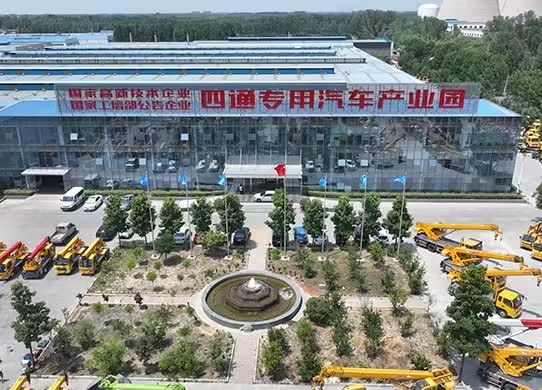


Truck cranes play a vital role in infrastructure development, serving as indispensable tools for lifting, transporting, and positioning heavy materials. From bridges and roads to power stations and urban construction, these versatile machines bring precision, efficiency, and safety to every stage of project execution. Choosing the right type of truck crane and understanding its functions in infrastructure projects can significantly improve productivity and reduce costs.
Founded in 2005, Jining Sitong Construction Machinery Co., Ltd. is a professional manufacturer specializing in truck cranes, aerial work platforms, sanitation vehicles, and emergency rescue trucks. With 55 patents, ISO and CE certifications, and exports to over 20 countries, Sitong has earned a strong global reputation for reliability and innovation. In this article, we’ll explore the importance of truck cranes in infrastructure projects, their benefits, applications, and how Sitong supports large-scale development worldwide.
Table of Contents
The Growing Role of Truck Cranes in Infrastructure
Modern infrastructure projects demand efficiency, safety, and flexibility. Truck cranes combine lifting capability with road mobility, allowing contractors to move equipment quickly between sites. This versatility makes them ideal for use in highways, bridges, airports, water systems, and power networks.
Unlike stationary cranes, truck cranes can operate without extensive setup. Their hydraulic systems and extendable booms allow them to handle complex lifting tasks in limited spaces. With continuous improvements in tonnage, stability, and automation, truck cranes have become an essential part of national and international construction projects.
Why Truck Cranes Are Essential for Infrastructure Construction
Infrastructure projects often involve diverse conditions and tight deadlines. The ability to quickly deploy a mobile lifting solution saves time and cost. Below are key advantages that make truck cranes indispensable:
- Mobility and Flexibility
Truck cranes can travel on highways and urban roads without disassembly, reducing transport time between construction zones. - Wide Range of Applications
From bridge girder placement to pipeline installation, truck cranes handle various lifting needs across different sectors. - Cost-Effectiveness
Compared with crawler or tower cranes, truck cranes have lower setup costs and faster turnaround, ideal for short-term or multi-location projects. - Ease of Operation
Equipped with advanced hydraulic systems and ergonomic controls, modern cranes provide precise operation with minimal manpower. - Safety and Reliability
Features such as automatic load monitoring, anti-sway control, and electronic stability systems enhance safety during lifting operations.
Typical Infrastructure Applications of Truck Cranes
Truck cranes are used across a variety of infrastructure sectors. The following table summarizes key applications:
| Project Type | Typical Load Capacity | Function | Common Crane Type |
|---|---|---|---|
| Bridge Construction | 50–150 tons | Lifting girders, steel beams | Hydraulic truck crane |
| Highway Maintenance | 8–30 tons | Sign installation, barrier repair | Compact truck crane |
| Power Line & Substation | 16–80 tons | Pole erection, equipment lifting | Telescopic truck crane |
| Water Conservancy | 25–100 tons | Pipe and gate installation | All-terrain truck crane |
| Urban Infrastructure | 10–60 tons | Concrete placement, modular installation | Medium-duty truck crane |
Each project type requires a crane that matches load demands, site accessibility, and terrain conditions.
How Truck Cranes Improve Construction Efficiency
- Fast Setup and Operation
Truck cranes can start lifting within minutes of arrival, eliminating time lost in assembly. - Reduced Manpower Requirements
Hydraulic systems automate most lifting actions, allowing smaller teams to complete complex operations. - Adaptability to Different Environments
Truck cranes can work in confined city streets or remote project sites with minimal modification. - Lower Transportation Costs
Since the crane itself is road-capable, no additional trailers are needed to move equipment between sites. - Precision Lifting
Advanced sensors and control systems provide real-time feedback, improving accuracy and reducing errors.
Key Features of Sitong Truck Cranes in Infrastructure Projects
As a leader in the construction machinery industry, Sitong integrates innovation, reliability, and practicality into every crane design. Here are the core features that make Sitong cranes ideal for infrastructure development:
- High-Tonnage Lifting Power: Sitong truck cranes range from 8 to 200 tons, covering diverse project scales.
- Advanced Hydraulic Systems: Dual-pump, load-sensing systems ensure smooth, efficient operation.
- Strong Structural Design: Reinforced chassis and high-strength steel extend durability under extreme conditions.
- Operator Comfort: Spacious cabins with intelligent controls enhance safety and precision.
- Easy Maintenance: Centralized lubrication and modular hydraulic lines simplify servicing.
- Comprehensive Safety Systems: Anti-overload protection, torque limiters, and automatic brake locking mechanisms ensure maximum safety.
These advantages make Sitong truck cranes trusted partners for contractors worldwide.

Case Study: Sitong Cranes in a Bridge Project
A recent infrastructure project in Southeast Asia involved constructing a multi-span highway bridge. The project required lifting pre-stressed concrete beams weighing over 80 tons each. Sitong supplied three 100-ton hydraulic truck cranes with 45-meter booms.
Results:
- Beam installation time reduced by 35%
- Operating costs decreased by 20%
- Zero safety incidents throughout construction
The mobility and reliability of Sitong truck cranes allowed the project team to complete construction two weeks ahead of schedule.
How to Select the Right Truck Crane for Infrastructure Work
When choosing truck cranes for infrastructure projects, consider the following key factors:
- Project Type: Bridge, road, or power line installation each demands different crane configurations.
- Load Weight and Height: Always select cranes with at least 20% higher rated capacity than your maximum load.
- Working Radius: Determine the horizontal and vertical reach requirements before selecting boom length.
- Site Conditions: Soft soil or uneven terrain may require wider outriggers and reinforced stability.
- Frequency of Movement: For multi-site projects, choose truck cranes with high road speeds and quick setup.
- Maintenance Support: Ensure manufacturer provides reliable after-sales service and spare parts availability.
Sitong engineers offer free consultation to help customers select the best crane for their specific project requirements.
The Advantages of Sitong in Global Infrastructure Projects
Jining Sitong Construction Machinery combines manufacturing excellence with global service experience.
- Global Export Network: Sitong cranes operate in more than 20 countries, including Southeast Asia, Africa, and the Middle East.
- Proven Reliability: ISO and CE certified cranes perform consistently in extreme conditions.
- Custom Solutions: Sitong offers tailor-made truck cranes to meet special engineering demands.
- After-Sales Support: Comprehensive training, spare parts supply, and remote diagnostics ensure seamless operation.
Sitong’s dedication to innovation and customer satisfaction makes it a trusted partner in large-scale infrastructure development.
Maintenance Tips for Long-Term Infrastructure Use
For long-term infrastructure operations, proper maintenance ensures that cranes deliver optimal performance:
- Conduct daily inspections of hydraulic systems, cables, and safety devices.
- Keep hydraulic oil and filters clean to prevent contamination.
- Lubricate all moving components weekly to avoid friction wear.
- Schedule professional servicing every 3–6 months.
- Store cranes in dry, covered areas to protect against corrosion.
Sitong offers detailed maintenance manuals and operator training to help clients maintain peak performance.

Future Trends: Smart and Sustainable Truck Cranes
The infrastructure sector is evolving rapidly, and truck crane technology is advancing with it. Emerging trends include:
- Intelligent Monitoring: Real-time sensors track load, temperature, and stability.
- Hybrid and Electric Power: Reducing fuel use and environmental impact.
- Autonomous Safety Systems: Automated stabilization and obstacle detection.
- Predictive Maintenance: AI analyzes performance data to prevent breakdowns.
Sitong actively invests in R&D to develop next-generation smart cranes that align with sustainable infrastructure goals.
Conclusion
Truck cranes are the backbone of modern infrastructure construction. Their strength, mobility, and precision make them essential tools in projects ranging from bridges to power systems. Choosing the right crane ensures efficiency, safety, and long-term performance.
Jining Sitong Construction Machinery continues to lead the industry with high-performance truck cranes engineered for the toughest environments. With advanced technology, robust quality control, and a global support network, Sitong helps customers complete their infrastructure projects on time and within budget.
Visit www.stcmcrane.com to explore Sitong’s full range of truck cranes designed for infrastructure excellence.
FAQ
Why are truck cranes preferred in infrastructure projects?
Because of their mobility, quick setup, and ability to handle heavy lifting tasks in multiple environments.
What is the ideal tonnage for bridge construction?
Typically between 80 and 150 tons, depending on beam weight and lifting radius.
Can truck cranes operate in rough terrain areas?
Yes. Sitong offers reinforced models designed for uneven or unpaved sites.
How often should cranes be maintained during long projects?
Daily inspections with professional servicing every 3–6 months are recommended.
Are Sitong cranes suitable for international standards?
Yes. All Sitong cranes comply with ISO and CE certifications.
Can Sitong customize cranes for specific infrastructure needs?
Absolutely. Sitong’s engineering team designs cranes tailored to project requirements.