



Confined-site lifting is one of the most technically demanding scenarios in modern construction and industrial operations. Urban redevelopment, factory retrofitting, underground utility work, and high-density infrastructure all require cranes to operate within minimal working envelopes. Optimizing lifting efficiency on such restricted sites demands not only the right crane type but also advanced planning, precise load-path engineering, and equipment with specialized operating features.
Table of Contents
Understanding the Challenges of Confined Job Sites
The complexity of confined sites stems from both physical and operational constraints. Limited ground area restricts stabilizer deployment, while adjacent structures reduce permissible boom angles and swing radii. In many cases, underground utilities alter ground bearing capacity, limiting crane placement options.
Common technical challenges include:
- Restricted outrigger footprint due to narrow access lanes
- Reduced slewing angles caused by barrier walls or nearby installations
- Compromised ground bearing capacity requiring load-spreading systems
- Limited permissible boom extension because of overhead obstructions
- Difficulty establishing safe load paths free of obstacles
- Required compliance with local regulations on noise, emissions, and site safety
These constraints require precise calculations and pre-lift planning to ensure safe and efficient operation.
Choosing the Right Crane Type for Limited Workspaces
Selecting the correct crane configuration is the most influential factor in confined-site lifting performance. Project planners must evaluate the operational envelope, load chart characteristics, and stability margins under short-radius lifting conditions.
Key evaluation parameters include:
- Boom configuration under restricted extension
- Maximum permitted outrigger spread relative to site geometry
- Turning radius for site access routes
- Ground pressure distribution for each stabilizer
- Dynamic load response during slewing under limited clearance
- Required lifting height versus available boom angle range
The crane must provide sufficient capacity while maintaining an acceptable stability coefficient within the limited setup area.
Why Lorry Mounted Cranes Excel in Confined Areas
Lorry mounted cranes deliver exceptional performance in tight conditions due to their integrated transport-lift chassis and optimized stabilizer geometry.
Engineering advantages include:
- Shorter wheelbase enabling better maneuverability in narrow streets
- Variable outrigger configurations that support asymmetric stabilizer deployment
- Faster transition from driving mode to lifting mode, reducing cycle time
- Short boom sections ideal for working under low structures or partially enclosed spaces
- Higher positioning accuracy due to closer proximity between crane base and load
These attributes make them highly effective for utility maintenance, rooftop materials handling, and urban construction tasks requiring frequent repositioning.
When a Truck Crane Is Still the Better Option
Truck cranes, despite their larger size, outperform other cranes in specific high-demand scenarios found even in confined sites.
They remain essential when:
- Loads require long boom outreach where lorry mounted cranes cannot maintain load charts
- The project demands high hook height under limited footprint
- The ground allows full or near-full stabilizer extension to maximize lifting moment
- Single-position heavy lifts are required, minimizing the need for repositioning
Modern truck cranes equipped with multi-mode outriggers, load moment monitoring systems, and short-radius lifting optimizations can perform efficiently even in sites previously considered unsuitable.
Key Strategies to Improve Lifting Efficiency
Improving confined-site lifting efficiency requires a combination of engineering analysis, equipment capability, and operational control.
Effective strategies include:
- Conducting digital site modeling or 3D lift planning to visualize obstructions
- Establishing controlled access paths for crane ingress and egress
- Using cranes with telescopic booms offering fine length adjustments
- Implementing short-radius lifting techniques based on load chart analysis
- Utilizing remote operation for better visibility during tight maneuvers
- Coordinating multi-equipment workflows to avoid operational interference
- Applying ground reinforcement mats to improve load-bearing capacity where necessary
These strategies significantly reduce operational delays and lifting risks.
Recommended Equipment Features for Confined Sites
Advanced crane features can dramatically improve performance when working within minimal space.
Important features include:
- Multi-stage hydraulic booms enabling precise extension control
- Automatic load moment indicators for real-time stability assessment
- Asymmetric outrigger control allowing full capacity within irregular site geometry
- High-precision proportional control valves for smooth lifting under tight tolerances
- Compact superstructure with reduced slewing tail radius
- Remote-control operation allowing operators to maintain optimal sightlines
- Enhanced micro-movement control for final load positioning
Such features increase operational safety and ensure consistent lifting performance under challenging conditions.
Comparison Table: Best Crane Options for Confined Sites
| Feature | Truck Crane | Lorry Mounted Crane |
|---|---|---|
| Mobility | Medium | Excellent |
| Setup Time | Longer | Very Short |
| Required Footprint | Medium to Large | Small |
| Short-Radius Performance | Strong with outriggers | Strong |
| Load Capacity | Medium to Heavy | Light to Medium |
| Operational Flexibility | Medium | Very High |
| Ideal Applications | High lifts, heavy loads | Urban, frequent repositioning |
Safety Factors When Operating in Tight Areas
Safety is paramount in restricted environments due to limited escape paths, increased obstruction risks, and higher likelihood of ground instability.
Key safety procedures include:
- Verifying outrigger load distribution through load-spread calculations
- Ensuring lifting paths maintain minimum clearance requirements
- Conducting pre-lift stability analysis for short-radius operations
- Implementing spotter communication systems for blind zones
- Using anti-collision devices when nearby structures or equipment are present
- Ensuring compliance with regional crane operation regulations and certifications
Failure to follow these procedures can significantly increase the likelihood of operational incidents.

Best Applications for Confined-Site Lifting
Optimized lifting strategies are widely used in:
- High-density urban construction
- Industrial plant upgrades and equipment replacement
- Underground utility repair in narrow streets
- Electrical substation work
- HVAC unit positioning on commercial rooftops
- Warehouse lifting involving restricted indoor spaces
- Renovation and retrofitting of old buildings with narrow access roads
Each scenario demands customized crane solutions tailored to site geometry and load requirements.
FAQ
What type of crane provides the best performance in restricted areas?
Lorry mounted cranes typically provide the highest maneuverability and fastest setup time for confined environments.
Can truck cranes be used effectively on tight sites?
Yes, modern truck cranes offer advanced outrigger configurations and short-radius capacity, making them viable for many restricted projects.
What features are most valuable in confined lifting operations?
Asymmetric outriggers, remote controls, compact superstructures, and precise hydraulic systems are particularly advantageous.
How do engineers plan lifting operations for tight areas?
Most rely on 3D lift planning, load-path simulations, and pre-lift stability calculations to determine feasible crane positioning.
What is the most important safety consideration in confined lifting?
Stability management is critical, especially when outriggers cannot be fully extended or when working near obstructions.
Need Expert Guidance for Confined-Site Lifting Solutions?
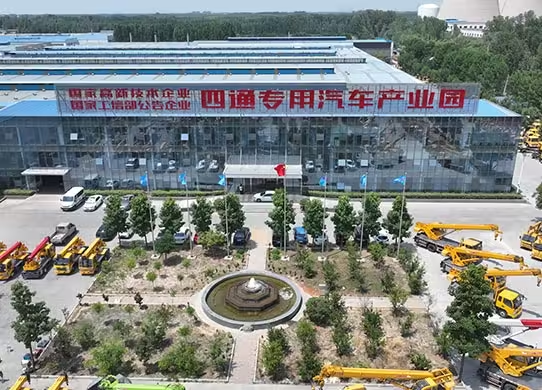
If you’re unsure which crane configuration delivers the best performance for restricted or urban job sites, the engineering team at Jining Sitong Construction Machinery Co., Ltd. is ready to assist you. With advanced R&D capabilities and extensive project experience, we provide tailored lifting solutions designed for maximum efficiency and safety.
Contact us today for a professional consultation and optimize your next project with the right crane and expert technical support!