



Selecting the right tonnage of a truck crane is a vital step in every construction, infrastructure, and lifting project. The tonnage not only determines the crane’s lifting capacity but also directly affects safety, efficiency, and cost. Choosing correctly means smoother operations, reduced downtime, and greater returns on investment.
In this article, we’ll explore what the tonnage of a truck crane means, how to determine the right tonnage for your projects, and how Sitong can provide a customized lifting solution that fits your needs.
Table of Contents
What Does “Tonnage of a Truck Crane” Mean?
The tonnage of a truck crane refers to its maximum rated lifting capacity, measured in metric tons. However, this number represents the maximum load under specific working conditions—typically when the boom is retracted and the load is close to the crane’s centerline.
As the boom extends or the working radius increases, the lifting capacity decreases. This relationship between tonnage, boom length, and radius is crucial for safe operation.
Example:
A 25-ton truck crane can lift 25 tons at a short radius (e.g., 3 meters), but only 10 tons when the boom is fully extended to 20 meters. That’s why understanding the load chart is essential before every lift.
Factors That Influence the Right Tonnage Selection
To determine the appropriate tonnage of a truck crane, consider the following key factors.
(1) Lifting Weight
Estimate the maximum load that needs to be lifted. Always choose a crane with a 20–30% higher rated capacity than your heaviest load to ensure safety margins.
(2) Lifting Radius and Boom Length
The longer the boom or the farther the load is from the centerline, the smaller the lifting capacity becomes. Check the load chart carefully to find the ideal working radius.
(3) Project Type
Different projects require different tonnages. For example:
- Infrastructure projects: 80–200 tons
- Municipal and utility work: 8–25 tons
- Emergency rescue: 25–50 tons
(4) Working Conditions
Ground stability, terrain, and available space impact the crane’s performance. Soft or uneven ground requires cranes with wider outriggers and higher stability.

Typical Applications for Different Tonnages
Here’s a helpful table summarizing the relationship between tonnage of a truck crane, typical lifting tasks, and project types.
| Tonnage of Truck Crane | Typical Application | Project Type | Key Advantages |
|---|---|---|---|
| 8–16 tons | Light material handling, street lighting, and utility maintenance | Municipal, urban construction | Compact size, high mobility, low fuel consumption |
| 20–25 tons | Pipeline installation, building maintenance, and small bridge work | General construction, utility work | Versatile, easy operation, suitable for tight spaces |
| 30–50 tons | Power station installation, rescue operations, mid-sized projects | Industrial and rescue engineering | Strong lifting power, stable and efficient |
| 80–200 tons | Bridge beams, large prefabricated components, heavy industry | Infrastructure and large projects | High lifting capacity, advanced hydraulic systems |
This table helps you quickly match your project type with the appropriate truck crane tonnage, ensuring performance and safety.
Why Choosing the Right Tonnage Matters
Selecting the correct tonnage of a truck crane is crucial for several reasons.
Safety: Overloading the crane may cause it to topple over or cause structural damage.
Efficiency: A properly matched crane minimizes repositioning and speeds up workflow.
Cost-effectiveness: Using a crane that is too large for its capacity will unnecessarily increase fuel and maintenance costs.
A balanced choice—neither too small nor too large—is the smartest long-term investment.

Sitong Truck Cranes: Reliable Choices for Every Lifting Task
At Sitong Construction Machinery, we design and manufacture a wide range of truck cranes from 8 tons to 200 tons. Each model is built for performance, durability, and easy maintenance.
Our main product series include:
- STC Series Truck Cranes — engineered for versatile applications
- Aerial Work Platforms — for safe and efficient high-altitude operations
- Sanitation Vehicles and Rescue Trucks — used in public safety and emergency response
Every Sitong truck crane meets ISO9001 and CE certification standards, ensuring international-grade quality and reliability. Our cranes are widely used in highway and bridge construction, power and water conservancy projects, and urban maintenance and emergency rescue operations.
Technology, Innovation, and Quality Control
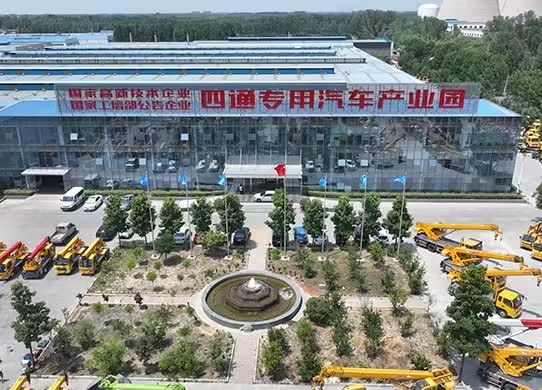
Sitong’s manufacturing base covers 390 acres and employs over 680 skilled professionals. Equipped with modern machining centers, intelligent welding systems, and automated assembly lines, our factory ensures precision and consistency in every product we produce.
We hold 55 patents covering crane control systems, hydraulic technology, and energy efficiency. Our provincial-level technology center continuously improves the performance, safety, and environmental impact of every Sitong product. This dedication to innovation makes our truck cranes not only powerful but also environmentally responsible and cost-efficient.
How to Calculate the Required Tonnage for Your Project
Here’s a simple calculation method to help you determine the right tonnage of a truck crane.
- Determine the maximum load weight
Example: 10,000 kg (10 tons) - Measure the lifting radius
Example: 12 meters - Check the load chart of available cranes to find which model can safely lift at that radius.
- Add a 25% safety margin
Recommended tonnage = 10 tons × 1.25 = 12.5 tons → choose a 16-ton truck crane.
By following this method, you’ll select a crane that operates safely within its optimal capacity.
Why Choose Sitong for Your Truck Crane Needs
Choosing Sitong means choosing quality, experience, and service.
- Proven Expertise: Since 2005, Sitong has built a reputation for excellence in crane manufacturing.
- Global Reach: Exported to more than 20 countries with strong after-sales support.
- Trusted Certifications: ISO and CE verified for global compliance.
- Tailored Solutions: Customization available for specific industry needs.
From light-duty 8-ton cranes to heavy-duty 200-ton machines, Sitong offers reliable lifting solutions trusted by professionals worldwide.
Conclusion
The tonnage of a truck crane not only determines its lifting capacity but also impacts the efficiency, safety, and success of the entire project. Selecting the appropriate tonnage and partnering with an experienced manufacturer, such as Jining Sitong Construction Machinery Co., Ltd., ensures that every lifting operation is precise, stable, and cost-effective.
Whether you’re managing municipal maintenance, industrial installation, or large-scale infrastructure, Sitong provides the perfect balance between technology, reliability, and performance.
Explore our full product range at www.stcmcrane.com and discover how Sitong can elevate your lifting operations to new heights.
FAQ
What does the tonnage of a truck crane represent?
It represents the maximum rated lifting capacity of the crane under specific working conditions, usually when the boom is fully retracted and the load is close to the crane’s base.
How do I know which tonnage of truck crane is suitable for my project?
You should calculate the maximum lifting weight, radius, and height required, then consult the crane’s load chart. Add a 20–30% safety margin to choose the most suitable tonnage.
Is a higher tonnage always better?
Not necessarily. A higher tonnage of a truck crane increases costs and fuel consumption. The right choice depends on your project’s actual lifting needs and site conditions.
What certifications should a reliable truck crane have?
Look for cranes certified with ISO9001 and CE, which ensure international safety and quality standards. Sitong’s truck cranes meet both certifications.
Does Sitong offer customized truck cranes?
Yes. Jining Sitong Construction Machinery provides custom configurations according to specific lifting requirements, site conditions, and regional regulations.